
Παρουσίαση/Προβολή
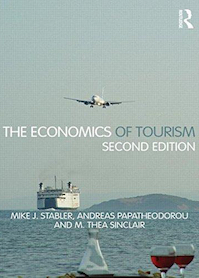
Economics of Tourism
(TOURHER101) - Andreas Papatheodorou, Theodoros Stavrinoudis and Frédéric Thomas
Περιγραφή Μαθήματος
The Economics of Tourism module comprises seven (7) units. Starting with tourism demand and forecasting, the module then analyses tourism supply theory and practice. It then steps forward to discuss crises in tourism as well as the role of hotel performance measurement indicators. The module then investigates the understanding and measurement of tourism economic impacts and discusses opportunities and constraints from tourism for local economic development using a pro-poor tourism perspective. The module finally examines issues related to foreign direct investment, destination attractiveness and tourism benefits.
Ημερομηνία δημιουργίας
Thursday, December 13, 2018
-
Περίγραμμα
Instructors
Professor Dr Andreas Papatheodorou, University of the Aegean, Greece
Professor Dr Theodoros Stavrinoudis, University of the Aegean, Greece
Associate Professor Dr Frederic Thomas, IREST, University of Paris 1, Pantheon Sorbonne, France
Course Syllabus
The Economics of Tourism module comprises seven (7) units. Starting with tourism demand and forecasting, the module then analyses tourism supply theory and practice. It then steps forward to discuss crises in tourism as well as the role of hotel performance measurement indicators. The module then investigates the understanding and measurement of tourism economic impacts and discusses opportunities and constraints from tourism for local economic development using a pro-poor tourism perspective. The module finally examines issues related to foreign direct investment, destination attractiveness and tourism benefits.
Assessment Methods
The module’s assessment is based on an individual assignment to be submitted on the e-class platform (and subjected to Turnitin plagiarism check) by Sunday 11/02/2024 at 23:55.
The assignment should be structured into two (2) parts. The first part should briefly discuss a theoretical concept covered in the lectures while the second should study a specific case to fruitfully apply the theory into an empirical context.
For example, the theoretical part may focus on the foundations of tourism demand and the empirical section may focus on the impact of COVID-19 on the demand for air transport services in a specific destination.
Students should notify Professor Papatheodorou about their proposed topic and related outline by sending a message over the e-class platform by Wednesday 17/01/2024.
The assignment should be around 3,000 words excluding tables/figures, references and appendices. Students should clearly mention their details in the cover page. This should be followed by a detailed table of contents, an introduction to the topic, the main body of the assignment, conclusions, the list of references and the appendices (if any).
References should follow the Harvard Referencing System. In addition to books and reports, the use of academic journals is strongly encouraged.
Bibliography
Key references are:
- Sloman, J., Guest, J. and Garratt, D. (2018) Economics (tenth edition), Harlow: Pearson Education.
- Stabler, M. J., Papatheodorou, A. and Sinclair, M. T. (2010) The Economics of Tourism, (second edition), London: Routledge.
Students will be provided with additional references during the lectures.